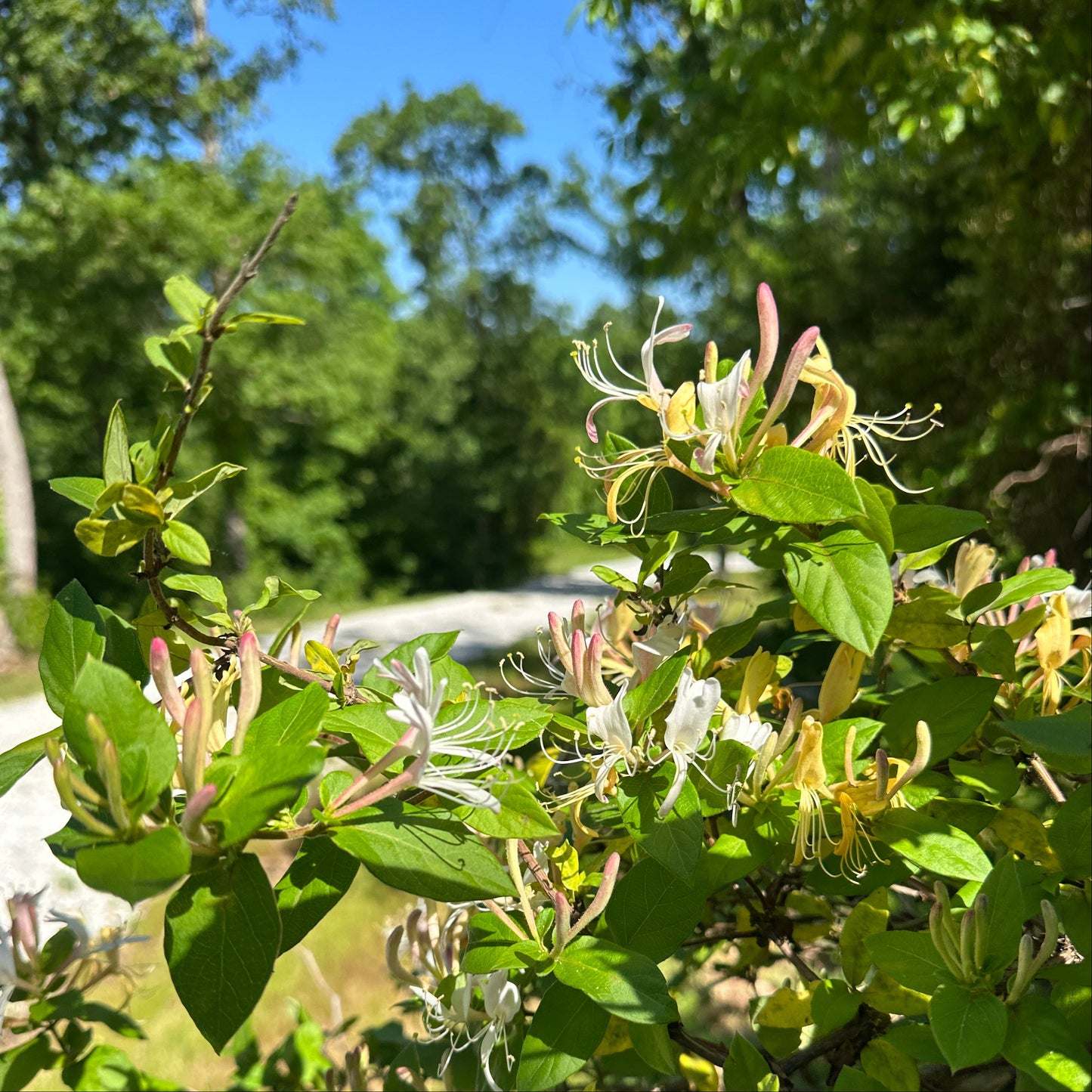
Honeysuckle Tincture
Honeysuckle Tincture
General Information
General Information
Honeysuckle is traditionally known for its cooling and clearing properties, making it especially supportive during times of seasonal stress and imbalance.
Used across herbal traditions, it has been associated with supporting immune and respiratory function while helping the body respond to inflammatory patterns. Its gentle nature makes it a versatile herb for overall wellness.
Fun Facts
Fun Facts
• Honeysuckle flowers contain a naturally sweet nectar.
• It has been used in traditional Chinese herbal medicine for centuries.
• Its fragrance becomes strongest in the evening.
• Often associated with renewal and seasonal change.
• As a child, I would gather honeysuckle with my brother and neighborhood kids, trying to collect the sweet “honey” from the flowers. We were convinced we’d gather enough to sell and make money. — Mary Margaret
Traditional Uses
Traditional Uses
Traditionally used to support:
• Seasonal immune challenges
• Upper respiratory comfort
• Throat and sinus support
• Cooling inflammatory patterns
• General wellness during seasonal transitions
Suggested Use
Suggested Use
Shake well.
Take 1–2 dropperfuls (30–60 drops) in water, tea, or directly by mouth, up to 2–3 times daily.
Key Constituents
Key Constituents
Chlorogenic acid
Associated with antioxidant and immune-supportive properties.
Luteolin
A flavonoid studied for its role in supporting inflammatory balance.
Flavonoids
Provide antioxidant support and help protect against oxidative stress.
Volatile aromatic compounds
Contribute to honeysuckle’s fragrant and therapeutic qualities.
Who It's For
Who It's For
This tincture may be especially supportive for:
• Those seeking seasonal immune support
• Individuals experiencing throat or sinus discomfort
• Those wanting a cooling, clearing botanical
• Individuals looking for gentle daily wellness support
Research & References
Research & References
Immune & Anti-Inflammatory Support
Honeysuckle (Lonicera japonica) has been studied for its bioactive compounds, including chlorogenic acid and luteolin, which are associated with antioxidant and anti-inflammatory activity.
Research suggests these compounds may help support the body’s response to inflammation and immune challenges, particularly during seasonal stress.
Antimicrobial Properties
Honeysuckle extracts have demonstrated antimicrobial activity in laboratory studies, supporting its traditional use in addressing infections and supporting immune health.
Skin & Detox Support
Its traditional use as a “cooling” herb aligns with research exploring its role in inflammatory pathways and skin health.
Overall Perspective
Much of the research on honeysuckle is still emerging, and many studies are laboratory-based rather than large clinical trials. As with many botanicals, effects are often gentle and cumulative.
Featured Study: Lonicera japonica (Japanese Honeysuckle) and Its Pharmacological Activity
https://pmc.ncbi.nlm.nih.gov/articles/PMC10635453/
Research on Lonicera japonica (Japanese Honeysuckle) has identified antioxidant, anti-inflammatory, antimicrobial, and bioactive plant compounds including flavonoids, chlorogenic acid, and triterpenes that continue to draw scientific interest for their potential therapeutic applications.
Traditionally, honeysuckle has been valued as a supportive herb during times of heat, imbalance, and seasonal transition.
Ingredients
Ingredients
Organic Fresh Wild Honeysuckle Flowers*, distilled water, grain alcohol, vegtable glycerin
*Wild-harvested in clean woodland environments.
Alcohol content: ~50–60%
Considerations
Considerations
Not for use during pregnancy.
Consult a healthcare practitioner if taking medications or managing health conditions.
Discontinue use if sensitivity occurs.
Refuge Remedies
Couldn't load pickup availability
Share